“Most American adults over 30 feel stuck in a cycle of diets and disappointment, with nearly 42 percent struggling to reduce body fat naturally. The endless search for results often leads to frustration when traditional weight loss solutions do not deliver promised changes. This guide reveals the true power of exercise and how pairing it with targeted options like KeySlim Drops creates a pathway toward lasting fat reduction without the pitfalls of restrictive fads.”
Table of Contents
- Defining Exercise’s Impact on Body Fat
- Types of Physical Activity for Fat Reduction
- How Exercise Promotes Fat Loss Mechanisms
- Comparing Exercise to Other Fat Reduction Methods
- Risks, Pitfalls, and Common Mistakes
Key Takeaways
| Point | Details |
|---|---|
| Aerobic Exercise is Key | Incorporating aerobic training is essential for effective fat reduction and metabolic health improvements. |
| Variety is Important | A combination of exercise modalities, including aerobic, resistance, and HIIT, enhances overall fat loss and metabolic adaptations. |
| Avoid Common Mistakes | Address unrealistic expectations and establish a consistent training regimen to prevent plateaus in fat reduction progress. |
| Personalization Matters | Tailor your exercise program based on age, fitness level, and individual metabolic characteristics for optimal results. |
Defining Exercise’s Impact on Body Fat
Exercise is a powerful metabolic intervention that transforms how your body manages and reduces fat. Understanding its complex mechanisms reveals why physical activity goes far beyond simple calorie burning. A systematic review of randomized controlled trials demonstrates that targeted exercise interventions can dramatically alter body composition, even without significant weight reduction.
Aerobic training emerges as the most potent strategy for fat reduction. Research indicates that both moderate and vigorous aerobic exercises produce substantial metabolic changes. Metabolic adaptation occurs through multiple pathways: increased mitochondrial efficiency, enhanced insulin sensitivity, and improved lipid metabolism. Studies confirm that aerobic exercise significantly improves blood lipid profiles, reducing triglycerides and total cholesterol while simultaneously increasing beneficial HDL cholesterol levels.
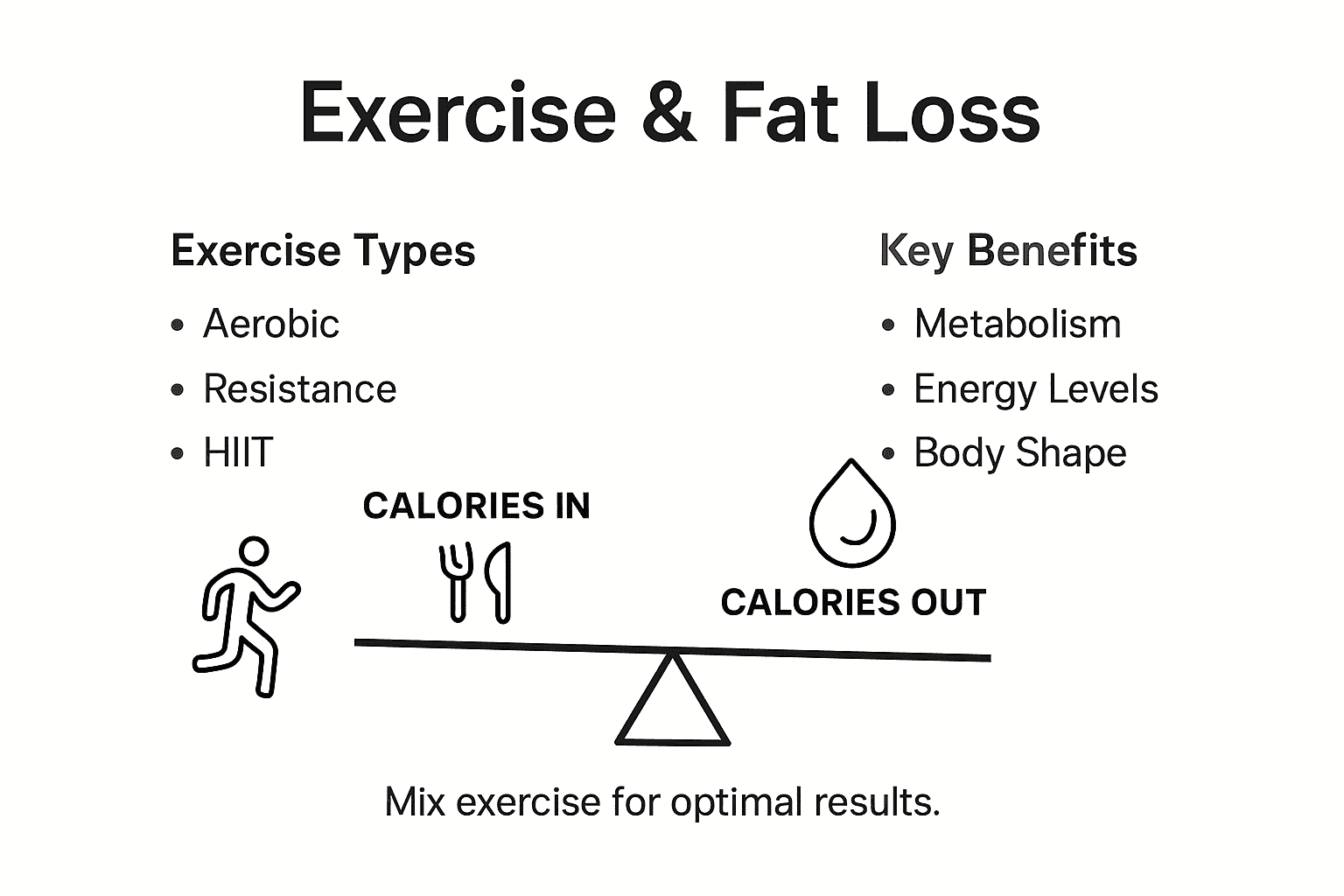
The body’s fat reduction response depends on exercise intensity, duration, and individual metabolic characteristics. Different exercise modalities trigger unique physiological responses:
- Aerobic exercise maximizes overall fat oxidation
- Resistance training builds lean muscle mass, increasing resting metabolic rate
- High-intensity interval training (HIIT) promotes rapid metabolic adaptations
Pro tip: Incorporate a mix of aerobic and resistance training for optimal fat reduction, targeting at least 150 minutes of moderate exercise per week to trigger meaningful metabolic changes.
Types of Physical Activity for Fat Reduction
Navigating the landscape of physical activity for fat reduction requires understanding the nuanced approaches that target body composition differently. Comprehensive research comparing exercise interventions reveals that not all exercise types produce identical results, with certain modalities demonstrating superior fat reduction potential across different demographic groups.
Four primary exercise categories emerge as powerful fat reduction strategies: aerobic training, resistance training, high-intensity interval training (HIIT), and combined exercise programs. Each approach offers unique metabolic benefits:

The following table summarizes the distinct effects of different exercise types on fat reduction and metabolic health:
| Exercise Type | Main Fat Reduction Benefit | Key Metabolic Impact |
|---|---|---|
| Aerobic Training | Lowers total body fat | Improves blood lipid profiles |
| Resistance Training | Boosts muscle-to-fat ratio | Raises resting metabolism |
| HIIT | Rapid fat oxidation | Activates brown adipose tissue |
| Combined Programs | Comprehensive results | Enhances overall body composition |
- Aerobic Training: Maximizes overall calorie expenditure
- Resistance Training: Builds lean muscle mass, increasing resting metabolic rate
- High-Intensity Interval Training: Accelerates fat oxidation and metabolic adaptation
- Combined Exercise Programs: Provides comprehensive body composition improvements
Age-specific research highlights the importance of tailoring exercise approaches to individual metabolic characteristics. Younger adults benefit most from high-intensity interval training, which promotes rapid fat loss and muscle retention. Middle-aged individuals see better results with moderate-intensity continuous training, emphasizing consistency and sustainable progress. Older adults require gentler approaches that preserve muscle mass while supporting gradual fat reduction.
Pro tip: Design a personalized exercise program that combines multiple modalities, considering your age, fitness level, and specific fat reduction goals to maximize metabolic effectiveness.
How Exercise Promotes Fat Loss Mechanisms
Groundbreaking metabolic research reveals that exercise transcends simple calorie burning, initiating complex physiological transformations that fundamentally reshape body composition. The human body responds to physical activity through intricate biochemical pathways that strategically mobilize and metabolize stored fat, creating a multifaceted approach to weight management.
At the cellular level, exercise triggers several critical fat loss mechanisms:
- Metabolic Activation: Increases mitochondrial efficiency
- Hormone Regulation: Modulates insulin sensitivity
- Enzyme Production: Enhances fat oxidation processes
- Tissue Remodeling: Promotes muscle-to-fat ratio improvements
High-intensity interval training demonstrates remarkable potential for metabolic transformation, particularly in activating brown adipose tissue. This specialized fat tissue functions like a metabolic furnace, converting stored energy directly into heat. By stimulating brown adipose tissue, exercise creates a powerful fat-burning environment that continues burning calories even after the workout concludes. Importantly, different exercise intensities produce unique metabolic responses, with high-intensity protocols showing superior results in energy expenditure and fat reduction.
Pro tip: Incorporate varied exercise intensities into your routine, focusing on high-intensity intervals that challenge your metabolic system and maximize fat loss potential.
Comparing Exercise to Other Fat Reduction Methods
Comprehensive network meta-analysis research reveals that exercise stands apart from traditional fat reduction methods by offering holistic metabolic improvements beyond simple weight loss. Unlike restrictive diets, surgical interventions, or pharmaceutical approaches, exercise provides a multidimensional strategy that transforms body composition, metabolic function, and overall health simultaneously.
Comparative analysis highlights key advantages of exercise over alternative fat reduction methods:
Here is a comparison of common fat reduction methods and their long-term effectiveness:
| Method | Sustainability | Health Risks | Metabolic Impact |
|---|---|---|---|
| Dietary Restrictions | Challenging to maintain | Nutrient deficiencies possible | Limited metabolic improvement |
| Weight Loss Surgery | Permanent but invasive | Surgical complications | One-time metabolic change |
| Pharmaceuticals | Often temporary | Side effects common | Minimal impact on metabolism |
| Exercise | Highly sustainable | Very low risk | Profound metabolic adaptation |
- Diet Restrictions: Limited long-term sustainability
- Weight Loss Surgery: Invasive with potential complications
- Pharmaceutical Interventions: Risk of side effects
- Exercise: Natural, adaptable, with comprehensive health benefits
Different exercise modalities demonstrate unique fat reduction capabilities. Aerobic exercise proves most effective for overall weight and BMI reduction, while high-intensity interval training excels in targeting specific metabolic markers like waist circumference, body fat percentage, and blood glucose levels. These targeted improvements distinguish exercise from one-dimensional weight loss approaches, offering a nuanced method of body composition management that addresses underlying metabolic health.
Pro tip: Select exercise strategies that align with your individual metabolic profile, prioritizing consistency and progressive intensity to achieve sustainable fat reduction results.
Risks, Pitfalls, and Common Mistakes
Comprehensive research on exercise interventions reveals that fat reduction through exercise is far more complex than most individuals anticipate. Many well-intentioned individuals sabotage their fitness goals by overlooking critical nuances in exercise implementation, leading to frustration and diminished results.
Common exercise-related fat reduction mistakes include:
- Unrealistic Expectations: Overestimating weight loss potential
- Compensatory Behaviors: Increasing calorie intake after workouts
- Inconsistent Training: Sporadic exercise without structured progression
- Improper Form: Executing exercises incorrectly, reducing effectiveness
- Neglecting Recovery: Insufficient rest between intense training sessions
Metabolic adaptation presents another significant challenge in fat reduction strategies. The human body is remarkably adaptive, often plateauing after initial progress. This biological response can lead to reduced metabolic rate, making continued fat loss progressively more difficult. Understanding these physiological mechanisms becomes crucial for developing sustainable exercise approaches that circumvent natural metabolic resistance and maintain consistent progress.
Pro tip: Track your metabolic changes systematically, adjusting exercise intensity and nutrition every 4-6 weeks to prevent plateaus and maintain continuous fat reduction momentum.
Unlock the Full Power of Fat Reduction with KeySlim Drops
Struggling to maintain consistent fat loss despite exercising regularly? This article highlights key challenges like metabolic adaptation and the need for varied, sustainable strategies to boost fat burning and improve body composition. If you want to enhance your fat reduction journey beyond what exercise alone can achieve, incorporating natural support can make all the difference. KeySlim Drops offers a unique liquid formula designed to complement your workouts by accelerating metabolism and promoting efficient fat breakdown without harsh stimulants.

Discover how KeySlim Drops works synergistically with your exercise routine to fight plateaus and boost fat oxidation naturally. Don’t let common pitfalls hold you back from the transformative results you deserve. Visit Uncategorized Archives – KeySlim Drops Guide to learn more about how KeySlim Drops combines nature and science for effective weight management. Take control now and fuel your fat reduction efforts with a proven, easy-to-use solution at https://keyslimdropguide.com. Your path to a leaner, healthier body starts here.
Frequently Asked Questions
What types of exercise are most effective for fat reduction?
Aerobic training, resistance training, high-intensity interval training (HIIT), and combined exercise programs are the most effective types of exercise for fat reduction, each offering unique metabolic benefits.
How does exercise promote fat loss beyond calorie burning?
Exercise initiates complex physiological transformations that mobilize and metabolize stored fat, enhance mitochondrial efficiency, regulate hormones, and promote tissue remodeling—all contributing to significant fat loss and improved body composition.
What should I consider when designing an exercise program for fat loss?
It’s important to tailor your exercise program to your age, fitness level, and specific fat reduction goals, incorporating a mix of aerobic and resistance training while aiming for at least 150 minutes of moderate exercise per week.
What are common mistakes people make that hinder fat loss through exercise?
Common mistakes include setting unrealistic expectations, compensating with increased calorie intake after workouts, inconsistent training, improper form, and neglecting recovery, all of which can sabotage fat loss efforts.
Recommended
- 10 Science-Backed Tips for Sustainable Weight Loss – KeySlim Drops Guide
- How to Use KeySlim Drops for Maximum Results: A Step-by-Step Guide – KeySlim Drops Guide
- Key Slim Drops: A Natural Solution for Weight Loss Challenges – KeySlim Drops Guide
- Unlocking Metabolic Revival: Why the “Drip & Drop” Ritual is Replacing Hard-to-Swallow Weight Loss Pills – KeySlim Drops Guide