Trying to control hunger can feel like an uphill battle, especially since the average American consumes over 3,600 calories per day—almost double the global average. This challenge is common for health-minded adults everywhere who wrestle with stubborn weight that resists traditional diet advice. Understanding what appetite suppression truly means helps demystify these struggles, revealing options beyond strict willpower that fit real life and support lasting progress.
Table of Contents
- What Appetite Suppression Really Means
- How Appetite Suppressants Work in the Body
- Natural Versus Synthetic Appetite Suppressants
- Effectiveness, Safety, and Potential Side Effects
- Common Pitfalls and Best Practices
Key Takeaways
| Point | Details |
|---|---|
| Appetite Suppression Mechanism | Appetite suppression is a complex biological process involving neurological and hormonal signals to regulate hunger and food intake. |
| Natural vs. Synthetic | Natural appetite suppressants, sourced from plants, typically have fewer side effects compared to synthetic options, which may involve significant health risks. |
| Individual Variability | The effectiveness of appetite suppressants varies by individual metabolism and lifestyle factors, emphasizing the need for personalized approaches. |
| Holistic Management | Successful appetite management includes a multidimensional strategy that incorporates mindful eating, understanding hunger cues, and managing emotional triggers. |
What Appetite Suppression Really Means
Appetite suppression represents a sophisticated biological mechanism designed to help individuals regulate food intake and manage body weight. At its core, appetite suppression involves complex neurological and hormonal processes that signal the brain to reduce hunger sensations and decrease overall food consumption. These processes are far more nuanced than simply telling someone to eat less.
The scientific understanding of appetite suppression reveals that it operates through multiple pathways in the human body. Certain medications can mimic hormones like GLP-1 to dampen neural reward pathways typically stimulated by food intake. An anorectic substance works by strategically interrupting hunger signals, creating a sensation of fullness that naturally reduces caloric consumption. This can occur through various mechanisms, including central nervous system interactions and neurotransmitter modulation.
Beyond pharmaceutical interventions, natural appetite suppression strategies exist that can help individuals manage their weight more effectively. These methods might include consuming high-protein foods that promote satiety, practicing mindful eating techniques, and understanding individual metabolic responses. By comprehensively addressing appetite through biological, psychological, and nutritional approaches, individuals can develop more sustainable weight management strategies.
Pro tip: Track your hunger signals and eat slowly to give your body time to recognize fullness, which can naturally help suppress excessive appetite.
How Appetite Suppressants Work in the Body
Appetite suppressants function through intricate neurological mechanisms that strategically interrupt hunger signals and modify metabolic responses. These compounds interact with multiple biological systems, primarily targeting the brain’s complex neural networks responsible for regulating food intake and satiety.

At the neurochemical level, serotonin plays a critical role in reducing appetite by activating specific neurons in the hypothalamus. This neurotransmitter works by selectively blocking hunger-stimulating receptors while simultaneously triggering pro-opiomelanocortin neurons that release hormones designed to suppress hunger. The result is a sophisticated biochemical response that naturally decreases food consumption and supports weight management goals.
Different appetite suppressants operate through varied physiological pathways, including hormonal regulation, neurotransmitter manipulation, and metabolic signaling. Some target the central nervous system directly, while others work by increasing feelings of fullness through mechanisms like slowing digestion, reducing insulin response, or altering gut hormone production. This multifaceted approach explains why some individuals may respond differently to various appetite suppression strategies.
The table below summarizes common mechanisms of appetite suppressant actions in the body:
| Mechanism | Example Compound/Method | Impact on Appetite |
|---|---|---|
| Serotonin Activation | Pharmaceuticals | Reduces hunger signals |
| Gut Hormone Control | GLP-1 mimetics | Increases fullness |
| Digestive Delay | High-fiber foods | Prolongs satiety |
| Metabolic Modulation | Protein supplements | Lowers calorie intake |
Pro tip: Consult with a healthcare professional to understand which appetite suppression mechanism might work best for your unique metabolic profile and weight loss objectives.
Natural Versus Synthetic Appetite Suppressants
The landscape of appetite suppression encompasses two distinct approaches: natural and synthetic solutions, each offering unique mechanisms and potential benefits for weight management. Understanding the fundamental differences between these categories helps individuals make informed decisions about their weight loss strategies.
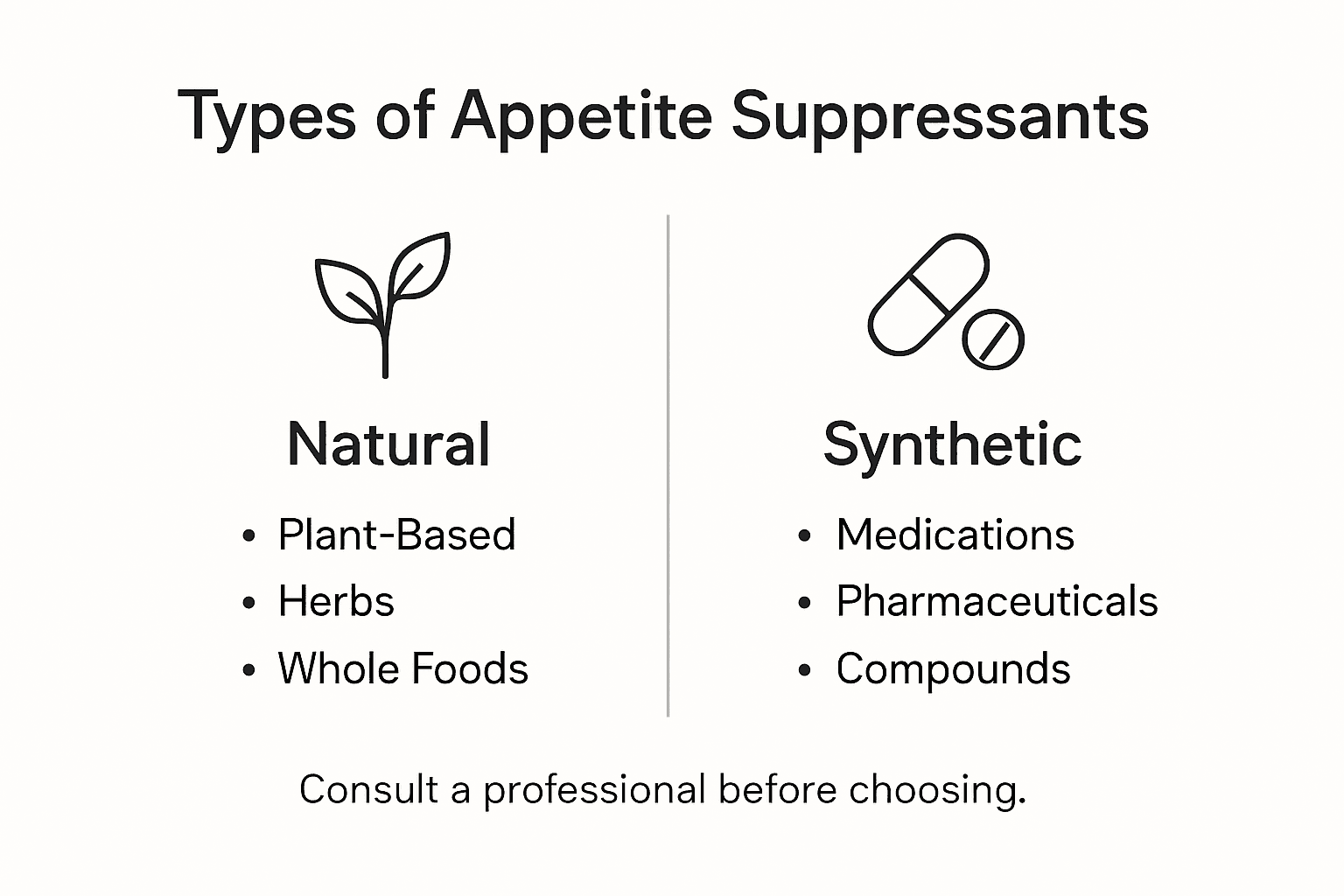
Natural appetite suppressants typically derive from plant-based sources, herbs, and whole food compounds that inherently reduce hunger signals. Natural appetite suppressant strategies often include ingredients like green tea extract, fiber-rich foods, protein supplements, and botanical compounds that work with the body’s metabolic processes. These options tend to have fewer side effects and provide additional nutritional benefits beyond mere hunger reduction.
Synthetic appetite suppressants, by contrast, are pharmaceutical compounds designed to directly manipulate neurochemical pathways. These medications typically require prescription and work through more aggressive mechanisms of action, such as blocking neurotransmitter receptors or altering brain chemistry to decrease appetite. While potentially more powerful, synthetic suppressants often carry higher risks of side effects and require careful medical supervision. The key distinction lies in their approach: natural suppressants support the body’s existing systems, whereas synthetic options forcibly override metabolic signals.
Here is a comparison of natural versus synthetic appetite suppressants to clarify their distinct characteristics:
| Factor | Natural Suppressants | Synthetic Suppressants |
|---|---|---|
| Source | Plant, food compounds | Pharmaceuticals, lab chemicals |
| Mode of Action | Supports normal metabolism | Alters chemical hunger signals |
| Side Effect Risk | Low to moderate | Moderate to high |
| Regulation | Often over-the-counter | Prescription only |
| Nutritional Benefit | Additional nutrients given | No extra nutritional value |
Pro tip: Consult with a healthcare professional to evaluate which type of appetite suppressant aligns best with your individual health profile and weight loss objectives.
Effectiveness, Safety, and Potential Side Effects
Appetite suppressants represent a complex intervention in weight management, with effectiveness and safety varying widely depending on individual physiological responses and specific product characteristics. Understanding the nuanced landscape of potential benefits and risks is crucial for making informed health decisions.
Medication-based appetite suppressants demonstrate variable outcomes, with some drugs like metformin showing modest weight loss potential by stimulating molecular pathways that reduce hunger. However, the long-term effectiveness depends on multiple factors, including individual metabolism, concurrent lifestyle interventions, and precise medical supervision. Pharmaceutical interventions typically require careful monitoring due to potential side effects that can range from mild digestive discomfort to more significant neurological or cardiovascular complications.
Natural appetite suppressants generally present a lower risk profile, offering gentler metabolic interactions with fewer documented adverse reactions. These alternatives often work through nutritional mechanisms, supporting the body’s natural hunger regulation systems without the aggressive pharmaceutical approach. The key differentiator lies in their mechanism: while synthetic suppressants forcibly interrupt metabolic signals, natural options typically support and balance existing physiological processes.
Pro tip: Maintain a comprehensive health journal documenting your appetite suppressant experiences, tracking both positive outcomes and potential side effects to help your healthcare provider make more informed recommendations.
Common Pitfalls and Best Practices
Successful appetite management requires a holistic approach that transcends simple dietary restrictions or pharmaceutical interventions. Individuals often encounter numerous challenges when attempting to suppress appetite and achieve sustainable weight loss, making a strategic and informed approach critical.
Sustainable weight loss strategies extend far beyond willpower and quick fixes, focusing instead on comprehensive behavior modification and skill development. Common pitfalls include becoming discouraged by restrictive diets, neglecting the psychological dimensions of eating, and expecting immediate transformative results. Behavioral patterns play a crucial role in appetite management, with environmental, social, and emotional factors significantly influencing food consumption habits.
Addressing appetite effectively requires a multidimensional strategy that considers individual metabolic responses, psychological triggers, and lifestyle constraints. Successful practitioners recognize that appetite suppression is not about deprivation but about creating a balanced, supportive ecosystem around nutrition and personal health. This involves developing mindful eating practices, understanding personal hunger cues, creating supportive social environments, and implementing stress management techniques that reduce emotional eating.
Pro tip: Create a personalized appetite management journal tracking not just food intake, but also emotional states, stress levels, and environmental triggers to develop a more comprehensive understanding of your unique eating patterns.
Discover Effective Appetite Suppression with KeySlim Drops Today
Appetite suppression is a complex challenge that involves more than just eating less. When hunger signals overwhelm your efforts, staying on track with weight loss goals can feel impossible. This article highlights how natural and synthetic methods work to reduce hunger but also points to the need for solutions that support your metabolism while minimizing side effects. If you struggle with controlling cravings and want a natural, scientifically informed approach to boost appetite suppression, it is time to explore targeted strategies.

Unlock your body’s potential with KeySlim Drops, a unique liquid formula designed to harness natural ingredients that help reduce hunger and promote fat burning. Unlike synthetic suppressants with harsh side effects, KeySlim Drops work gently yet effectively to support satiety and accelerate weight loss. Ready to break free from constant hunger and finally see real results? Visit KeySlim Drops Guide now and learn more about how this breakthrough solution fits into your appetite management journey. For insights and tips that complement your weight loss goals, explore our Uncategorized Archives – KeySlim Drops Guide where we share essential information to help manage cravings safely and naturally.
Take control of your appetite and move closer to the healthier, leaner you with KeySlim Drops. Act now to start your transformation.
Frequently Asked Questions
What is appetite suppression?
Appetite suppression is a complex biological mechanism that helps regulate food intake and manage body weight by signaling the brain to reduce hunger sensations and decrease overall food consumption.
How do appetite suppressants work in the body?
Appetite suppressants function through neurological mechanisms that interrupt hunger signals, involving neurotransmitter modulation, hormonal regulation, and metabolic signaling, ultimately decreasing food consumption.
What is the difference between natural and synthetic appetite suppressants?
Natural appetite suppressants derive from plant-based sources and support normal metabolic functions, while synthetic appetite suppressants are pharmaceutical compounds that directly manipulate neurochemical pathways and typically come with higher side effect risks.
Are natural appetite suppressants safe to use?
Natural appetite suppressants generally present a lower risk profile compared to synthetic options, but it’s important to consult a healthcare professional to ensure they align with your health profile and weight loss objectives.