
Most American adults know the frustration of losing weight only to regain it months later. For health-conscious people over 30, staying on track feels even harder as metabolism slows and busy routines take over. Nearly 80 percent of those who lose weight end up regaining it within five years. This step-by-step guide offers practical strategies that look beyond ordinary diets, focusing on personalized habits and sustainable routines that actually work.
Table of Contents
- Step 1: Assess Current Habits And Mindset
- Step 2: Establish Personalized Nutrition Routines
- Step 3: Integrate Sustainable Physical Activity
- Step 4: Monitor Progress And Stay Accountable
- Step 5: Adjust Strategies For Lasting Results
Quick Summary
| Key Point | Explanation |
|---|---|
| 1. Assess your habits and mindset | Keep a detailed journal for a week to understand your eating patterns and emotional triggers. |
| 2. Create a personalized nutrition plan | Consult a registered dietitian to tailor a nutrition strategy to your unique metabolism and lifestyle. |
| 3. Choose enjoyable physical activities | Focus on integrating movement into your daily life rather than adhering to punishing workout routines. |
| 4. Track your progress comprehensively | Use diverse metrics like body measurements and energy levels to maintain accountability and celebrate your achievements. |
| 5. Be flexible and adjust strategies | Embrace a growth mindset and regularly modify your weight management approaches based on progress and challenges. |
Step 1: Assess current habits and mindset
Successful weight loss is more than just tracking calories or exercising randomly. It requires a strategic understanding of your personal habits and mental approach. Think of this step as creating a comprehensive roadmap for your weight management journey.
To effectively assess your current habits, start by keeping a detailed journal for one full week. Track everything you eat and drink, noting portion sizes, emotional states during meals, and your typical daily routine. Medically backed healthy habits are crucial for sustainable weight loss. Pay attention to patterns like late night snacking, stress eating, or mindless consumption during work or while watching television.
Psychological preparation is equally important. Research from Harvard shows that successful weight loss maintenance requires more than willpower it demands consistent self-regulation and confidence. Reflect on your past weight loss attempts and identify triggers that derailed your progress. Are you an emotional eater? Do you tend to abandon plans when facing initial challenges? Understanding these mental barriers helps you develop targeted strategies for long-term success.
Pro tip: Create a digital or physical dashboard that visually tracks your daily habits, providing instant motivation and accountability for your weight management journey.
Step 2: Establish personalized nutrition routines
Every successful weight loss journey requires a nutrition plan that feels uniquely yours. Precision nutrition moves far beyond generic diet recommendations by creating strategies specifically tailored to your individual biological makeup and lifestyle.
Start by understanding that no universal diet works for everyone. Your nutrition routine should reflect your unique metabolism, genetic predispositions, and daily energy requirements. Personalized nutrition considers factors like genetics, lifestyle, and gut microbiome when designing an effective eating strategy. Begin by consulting with a registered dietitian who can help you conduct comprehensive metabolic testing and analyze your current nutritional intake.
To create your personalized nutrition plan, track your food responses meticulously. Note how different foods impact your energy levels, hunger signals, and overall well-being. Pay attention to portion sizes, nutrient density, and your body’s specific reactions. Some people thrive on higher protein diets, while others need more complex carbohydrates. The key is developing a flexible approach that adapts to your body’s changing needs and supports sustainable weight management.
Pro tip: Invest in a food tracking app that allows detailed nutrient logging and provides personalized insights about your dietary patterns and metabolic responses.
Step 3: Integrate sustainable physical activity
Successful weight loss isn’t about punishing workout regimens or spending endless hours at the gym. It’s about creating a lifestyle of consistent, enjoyable movement that feels natural and sustainable for you. Physical activity recommendations go beyond traditional exercise routines, emphasizing the importance of integrating movement into your daily life.

Start by understanding that physical activity encompasses more than structured workouts. Think about movement as a holistic approach that includes walking, taking stairs, gardening, house cleaning, and any activity that gets you off the couch. Aim for at least 150 minutes of moderate aerobic activity weekly, but break this down into manageable chunks that fit your schedule. This might mean 30-minute walks five days a week, or shorter 10-minute activity bursts throughout your day. The key is finding activities you genuinely enjoy and can maintain long term.
To make physical activity sustainable, choose exercises that match your fitness level and personal interests. If you hate running, don’t force yourself onto a treadmill. Instead, try dance classes, swimming, cycling, or hiking. Consider working with a fitness professional who can help design a personalized plan that adapts to your body’s capabilities and progresses gradually. Remember that consistency trumps intensity when it comes to maintaining weight loss and overall health.
Pro tip: Schedule your physical activities like important business meetings by blocking specific times in your calendar and treating them as non negotiable commitments to yourself.
Step 4: Monitor progress and stay accountable
Tracking your weight loss journey isn’t about obsessive measurement but creating a supportive system that helps you understand and celebrate your progress. Successful long-term weight loss requires consistent self-monitoring and psychological commitment, transforming accountability from a chore into a powerful motivational tool.
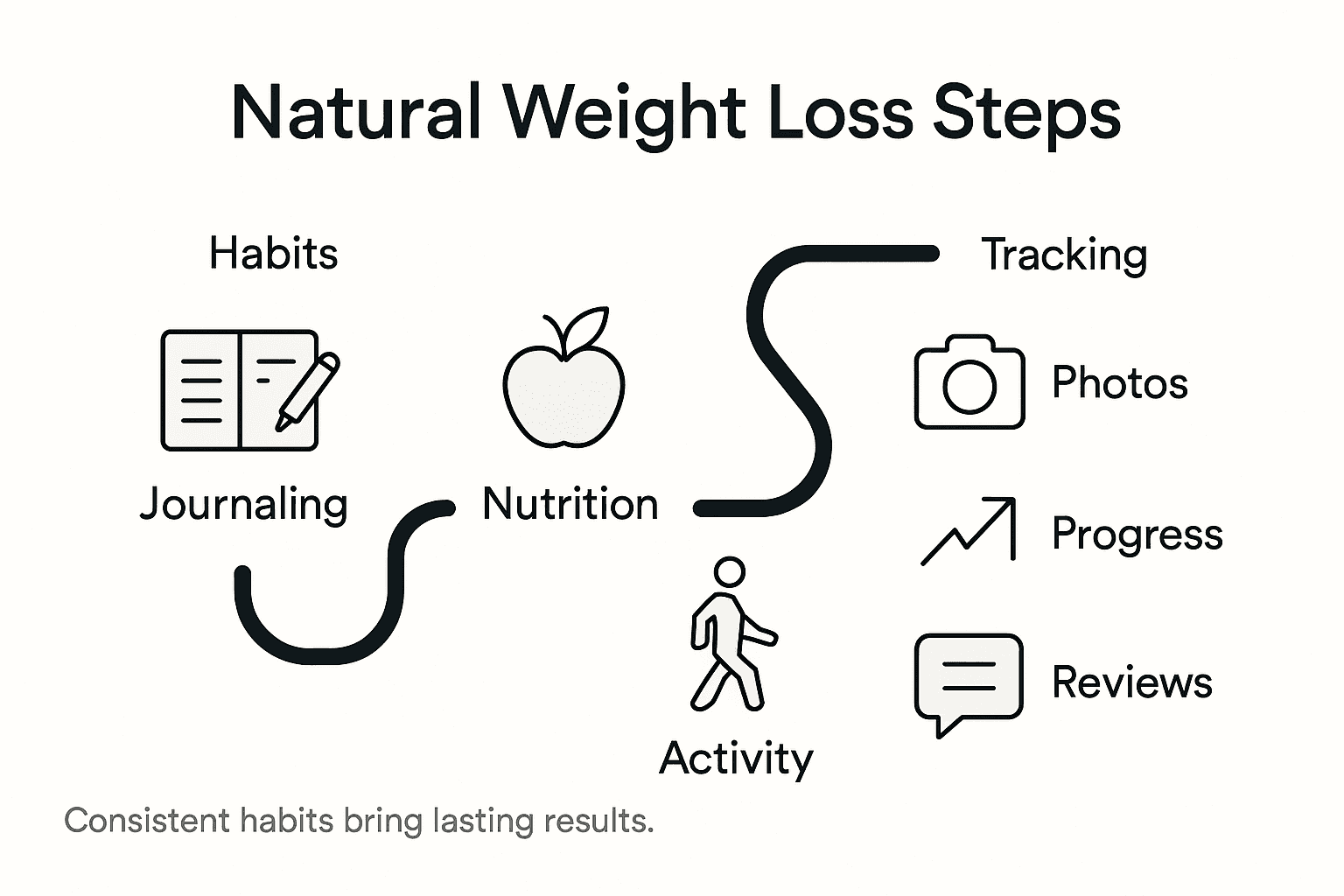
Develop a comprehensive tracking system that goes beyond just weighing yourself. Utilize tools like food diaries, mobile apps, and support groups to maintain behavioral changes and prevent falling back into old habits. Consider tracking multiple metrics such as body measurements, energy levels, workout performance, and how your clothes fit. Choose digital or physical tracking methods that feel intuitive and enjoyable for you. Some people prefer detailed spreadsheets, while others thrive with visual progress apps or simple journal entries.
Remember that progress is not linear. Some weeks you might see significant changes, while others might feel stagnant. The key is maintaining consistent effort and viewing setbacks as learning opportunities rather than failures. Create a support network of friends, family, or online communities who can offer encouragement and perspective. Consider scheduling monthly check-ins with a nutritionist or fitness professional who can help you adjust your strategy and provide objective feedback on your progress.
Below is a summary of key metrics you can track for a holistic view of your progress:
| Progress Metric | Why Track It | How to Measure |
|---|---|---|
| Body measurements | Shows fat loss beyond scale | Use tape measure monthly |
| Energy levels | Indicates lifestyle impact | Record daily in a journal |
| Workout performance | Reflects improved fitness | Note reps, time, or distance |
| Clothing fit | Visible body changes | Compare fit of regular clothes |
Pro tip: Take monthly progress photos from consistent angles and in similar lighting to visually track your transformation beyond what numbers on a scale can show.
Step 5: Adjust strategies for lasting results
Weight loss is not a destination but a continuous journey of adaptation and self discovery. Long-term weight management requires setting realistic goals and being prepared to modify your approach as your body and lifestyle evolve over time.
Start by understanding that plateaus are normal and not signs of failure. Your metabolism changes as you lose weight, which means the strategies that worked initially might need tweaking. Regularly assess your nutrition plan, exercise routine, and overall energy levels. This might involve gradually increasing workout intensity, adjusting macronutrient ratios, or introducing new types of physical activities that challenge your body in different ways. Be willing to experiment and listen to your body’s signals.
Create a flexible mindset that views lifestyle modifications as opportunities for growth rather than restrictions. This means having backup plans for challenging situations like travel, stress, or unexpected schedule changes. Build a toolkit of quick healthy meal options, adaptable workout routines, and stress management techniques. Connect with support groups or a health coach who can provide personalized guidance and help you navigate challenges. Remember that sustainable weight management is about consistency and resilience more than perfection.
Here’s a quick look at common challenges and targeted strategies for overcoming them in weight management:
| Challenge | Description | Targeted Strategy |
|---|---|---|
| Emotional eating | Eating in response to stress or feelings | Practice mindfulness, journal moods |
| Hitting a weight plateau | Progress stalls despite effort | Reassess calorie needs, increase activity |
| Loss of motivation | Declining enthusiasm over time | Set short-term goals, track wins |
| Lack of accountability | No system for tracking and review | Use apps, partner with a friend |
Pro tip: Schedule quarterly personal health reviews where you comprehensively evaluate your progress and intentionally recalibrate your weight management strategies.
Unlock Natural Weight Loss Maintenance With Confidence
Maintaining weight loss naturally requires consistent self-monitoring, personalized nutrition, and sustainable habits as detailed in our step-by-step guide. Many people struggle with setbacks like emotional eating or plateaus, making lasting success feel frustrating and out of reach. If you want to turn those challenges into steady progress you need reliable support that complements your lifestyle and respects your body’s unique needs.
Discover the power of KeySlim Drops, a natural dietary supplement designed to boost your fat-burning journey without harsh pills or complicated regimens. This liquid formula fits perfectly into the personalized approach recommended for sustainable weight management. For more insights on healthy habits and real customer experiences visit the Uncategorized Archives – KeySlim Drops Guide.
Ready to embrace a proven and natural solution that works hand in hand with your personalized nutrition and activity routines? Take the next step today by exploring how KeySlim Drops can enhance your weight loss journey at https://keyslimdropguide.com and start transforming your goals into lifelong results.
Frequently Asked Questions
How can I effectively assess my current habits for weight loss?
To assess your habits, keep a detailed journal for one week, tracking everything you eat and drink, as well as your feelings during meals. Identify patterns such as late-night snacking or emotional eating, and use this information to create a personalized weight management plan.
What are practical ways to establish a personalized nutrition plan?
Start by consulting with a registered dietitian to understand your unique nutritional needs. Track your body’s responses to different foods over time and adjust your diet based on what helps you feel energized and satisfied—aim for small adjustments every few weeks.
How can I integrate sustainable physical activity into my daily routine?
Look for enjoyable physical activities that fit your lifestyle, such as walking, gardening, or dancing. Schedule at least 150 minutes of moderate aerobic activity each week and break it down into manageable sessions, like 30-minute walks five days a week.
What should I monitor to stay accountable during my weight loss journey?
Track multiple metrics beyond just your weight, such as body measurements, energy levels, and workout performance. Choose a method—like a journal or an app—that feels enjoyable and review your progress regularly, adjusting your approach as needed.
How do I adjust my strategies for long-term weight management?
Recognize that weight management requires ongoing adjustments as your body and lifestyle change. Regularly re-evaluate your nutrition and exercise plans, and be open to experimenting with new methods to find what works for you over time.
What common challenges might I encounter in maintaining weight loss?
You may face challenges like emotional eating or hitting weight plateaus. Develop targeted strategies such as practicing mindfulness for emotional eating or increasing your activity level when progress stalls, and keep a flexible mindset to adapt to obstacles.